
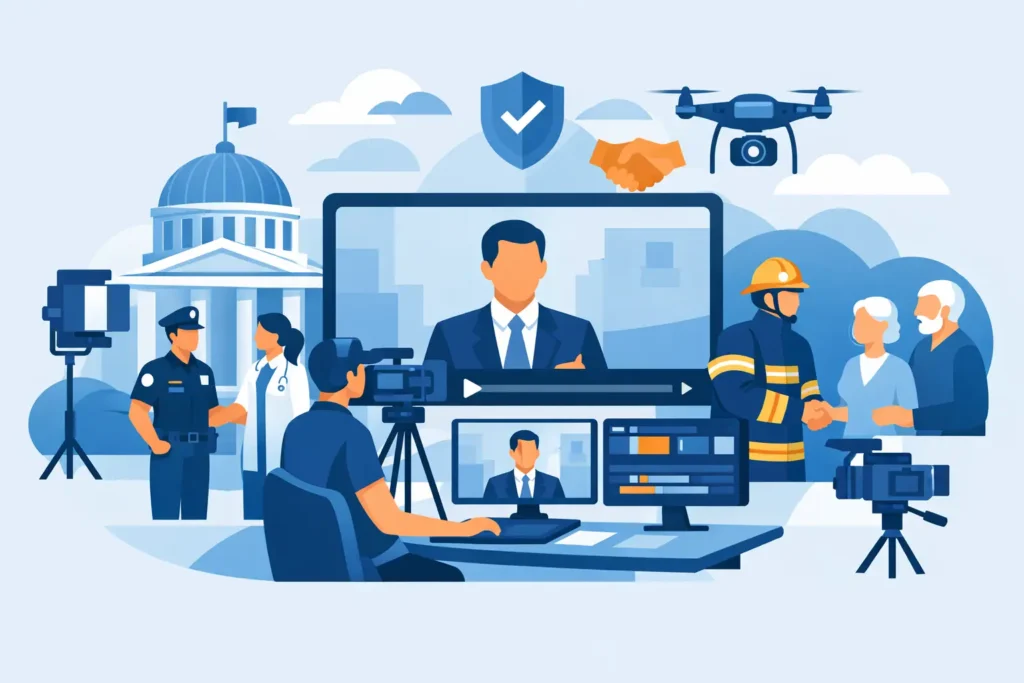
Public Sector Video Production That Builds Trust
A resident may only spend two minutes looking for a permit update, road closure, public meeting, or emergency resource. If the information is difficult to find or hard to understand, trust can disappear quickly. Public sector video production gives agencies a practical way to make essential information clear, human, and easier to act on.
For public-information teams, city departments, school systems, and community institutions, video is not just a promotional tool. It can explain a process before phones start ringing. It can show the people behind a service. It can help residents understand what is changing, why it matters, and what they need to do next.
The best public-sector videos are built around that job. They are clear before they are clever. They respect the audience’s time, follow an organized approval process, and give internal teams one less complicated project to manage.
Public Sector Video Production Starts With a Clear Purpose
A video can serve many audiences, but it should not try to serve all of them at once. A recruitment film for a fire department needs a different message than a short video explaining utility billing changes. A council meeting livestream has different requirements than a campaign encouraging residents to use a new public service.
Before planning a shoot, define the action the viewer should take. That may be attending a meeting, applying for a position, following a safety procedure, using an online portal, supporting a community initiative, or simply understanding how a department works.
This step prevents a common problem: producing a polished video that does not answer the audience’s actual question. A strong production partner will ask who needs this information, what they may not understand yet, and where the video will be used. Those answers shape the length, tone, script, visual approach, and delivery format.
For example, a two-minute overview of a capital improvement project can work well on a website or social channel. The same project may also need a 30-second version for digital advertising, a presentation cut for public meetings, and supporting B-roll for future updates. Planning those uses early saves time and keeps the message consistent.
Make Complex Public Information Easier to Understand
Government and public institutions often work with policies, timelines, regulations, and processes that are familiar internally but confusing to the public. Video can close that gap when it focuses on plain language and practical context.
Instead of opening with department history or organizational structure, start with the resident’s concern. If a project affects traffic, explain where the work is happening, when it will happen, and what drivers should expect. If a new program is available, show who qualifies, how to apply, and where to get help.
Visuals do real work here. A map, simple on-screen labels, footage from the affected location, and a staff member speaking plainly can make a complicated topic easier to follow. Drone footage can provide useful perspective for infrastructure, parks, construction, and community development projects, but it should support the explanation rather than become the whole story.
Clarity also means being realistic about what a video can cover. A broad policy update may need a short overview video paired with separate materials for detailed questions. Trying to put every exception, deadline, and policy reference into one piece often creates a video that nobody finishes.
Build Trust With People, Not Just Information
Public agencies are often expected to communicate during moments of uncertainty. A project may be delayed. A service may change. A department may need to address a concern before inaccurate information fills the gap. In those moments, a calm, direct video can help people hear from credible voices.
The right spokesperson depends on the message. Sometimes it is an elected official or department leader. Other times, the most effective voice is the person who runs the program, maintains the system, teaches the class, or responds in the field. Viewers respond to expertise that feels accessible.
That does not require a highly scripted performance. A prepared subject who understands the key points will usually sound more credible than someone trying to memorize every line. Interviews can be guided by thoughtful questions, then supported with real footage of the work, the places, and the people involved.
Authenticity has limits, though. Public communication must still be accurate, inclusive, and approved by the right stakeholders. The goal is not to make a video feel casual at the expense of confidence. The goal is to make it feel honest, prepared, and useful.
Plan for Stakeholders Before Production Begins
Public-sector projects can involve department leadership, communications staff, legal teams, elected officials, community partners, and subject-matter experts. That is normal. The challenge is not the number of stakeholders. The challenge is giving them a clear process before feedback starts.
A practical production plan identifies the project owner, decision-makers, review stages, desired launch date, and any required accessibility standards. It should also account for filming permissions, location access, security rules, branding requirements, and sensitive information that cannot appear on camera.
This is where one team and one point of contact makes a meaningful difference. Rather than asking a communications manager to coordinate a producer, camera operator, editor, drone pilot, and livestream technician, an integrated production team can manage those details under one plan.
At Intent Productions, that approach is built for organizations that run hard. The production team handles concept development, planning, filming, editing, and final delivery while keeping the client informed with clear timelines and defined next steps.
Early alignment matters most when the schedule is tight. A major announcement, public event, grant deadline, or emergency update may not leave much room for extended revisions. Agreeing on the core message and approval path before filming helps the project move without surprises.
Use the Right Format for the Job
Not every public-sector video needs a large crew or a cinematic treatment. The best format depends on the purpose, audience, distribution channel, and available timeline.
A recruiting campaign may benefit from a larger brand film that shows the work, culture, and community impact of a department. Training content needs clean demonstrations, organized chapters, and an editing approach that supports retention. A public meeting may require dependable livestreaming, clear audio, and a recording that remains useful after the event.
Short-form video has its place, especially for service reminders, event promotion, and frequent social updates. But short does not automatically mean simple. A 30-second piece still needs a focused message, good sound, readable graphics, and a clear call to action.
It is often smart to capture more than one deliverable during a shoot. An interview day can produce a main story, shorter social clips, staff quotes, B-roll, and still frames for future communications. This does not mean creating content for its own sake. It means making the most of time already set aside with staff, locations, and equipment.
Accessibility Is Part of Good Communication
A video cannot fully serve the public if portions of the audience cannot use it. Captions, readable on-screen text, clear audio, and thoughtful pacing should be part of the production plan from the beginning, not a last-minute fix.
Captions support people who are deaf or hard of hearing, as well as viewers watching without sound. Large, high-contrast graphics help viewers quickly understand names, dates, locations, and instructions. Clean audio matters because viewers will forgive a less-than-perfect image long before they will tolerate speech they cannot hear.
Accessibility also supports the larger goal of public communication: reducing friction. When the message is easy to access and understand, people are more likely to use the service correctly, share accurate information, and feel that the institution considered their needs.
Measure What Useful Video Actually Does
Views can be helpful, but they are not the only measure of success. A video explaining a new service may be successful if it reduces repetitive calls to a department. A recruitment video may matter because it brings in more qualified applicants. A training video may help supervisors deliver consistent information across locations.
Set a practical measure before launch. Depending on the project, that could include event registrations, applications, website visits, completion rates, staff feedback, or fewer common questions. The right metric depends on the message.
Video also has a longer shelf life than many teams expect. A well-planned service overview can support presentations, community outreach, onboarding, grant reporting, and future campaigns. Keeping organized footage and a reliable production relationship means you do not have to start over every time a new communication need appears.
The next time your organization needs to explain a change, show the value of a public service, or bring people into an important conversation, begin with the question your audience is already asking. Build the video around the answer, give the process a clear owner, and let the production team handle the video.