
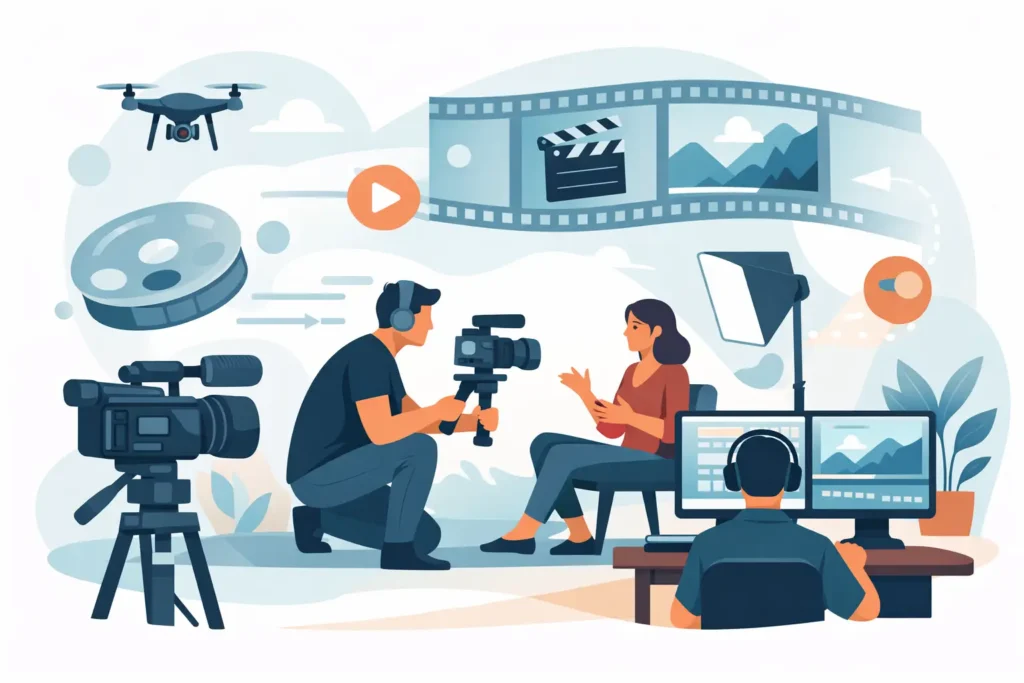
B Roll Footage Production Services That Work
A new campaign is ready to launch, the message is approved, and the edit needs more than interviews and logo screens. It needs the work, people, spaces, and moments that make the message believable. B roll footage production services give organizations a practical way to capture those visual building blocks without turning an already busy communications team into a production crew.
For a marketing director, HR leader, nonprofit development team, or public-information office, good B-roll is not filler. It is proof. It shows a candidate what the workplace feels like, a donor where support is going, or a community member how a program operates. When it is planned well, one organized shoot can support many projects for months.
What B-Roll Should Do for Your Organization
B-roll is supplemental footage used alongside interviews, narration, graphics, or a primary action. In a brand video, it may show employees solving problems, customers using a product, or a team at work. In a recruitment piece, it can show the environment, collaboration, training, and the small details that help a job feel real.
The strongest footage does more than look polished. It gives an editor options. A communications team may need a 90-second recruiting video today, several short social clips next month, and a presentation opener later in the year. Thoughtful coverage makes those uses possible without asking employees to repeat the same shoot every time.
That is why the first question is not, “What shots do we need?” It is, “What do we need people to understand?” The footage should reinforce a specific message: this is a capable team, this program creates measurable impact, this facility is ready to serve, or this event brought the right people together.
When B Roll Footage Production Services Make Sense
Organizations often call for B-roll after realizing an existing video library is too thin, too dated, or too generic. A library full of posed handshakes and empty office shots rarely supports a clear campaign. Current, intentional footage reflects real people, real operations, and the character of the organization.
B-roll production is especially useful when a team has recurring communication needs but limited capacity to coordinate shoots. Hiring campaigns, annual fundraising, internal updates, social media calendars, public outreach, and conference presentations all benefit from a supply of current visual assets.
It also makes sense before a larger video project begins. Capturing environmental and operational footage early can reduce pressure on an interview day. It gives the editor material to cover transitions, clarify statements, and maintain pace when an on-camera response needs to be shortened.
There is a trade-off. A broad footage library requires planning, access, and enough time on site to capture genuine activity. If the immediate need is a single short announcement, a smaller focused shoot may be the smarter investment. The right scope depends on how many audiences, channels, and future uses the footage needs to serve.
Start With Uses, Not a Shot List
A useful B-roll plan begins with the finished communications work. Before cameras arrive, identify where the footage may appear and what each audience needs to see. A hospital recruiting campaign may require staff interaction, specialized equipment, patient-safe environments, and workplace culture. A nonprofit might need program delivery, volunteers, donor-funded resources, and respectful moments of impact.
From there, production planning turns needs into a realistic shooting schedule. That includes confirming locations, identifying people who need to be on camera, arranging releases where appropriate, considering privacy and safety requirements, and finding times when real activity can be filmed without disrupting operations.
A shot list still matters, but it should function as a guide rather than a script. Real workplaces are active. A planned meeting may run late. A classroom may change schedules. A facility may have areas that cannot be filmed. An experienced crew can adapt while protecting the central purpose of the shoot.
Plan for Visual Variety
Editors need more than one wide view of a room. A usable collection includes wide shots that establish location, medium shots that show people working together, and close details that add texture. Movement also matters. Someone entering a building, preparing materials, greeting a client, or operating equipment can communicate more than a static pose.
Variety should not come at the expense of authenticity. If employees normally work at computers, show meaningful work rather than asking everyone to smile at a screen. If the organization serves the public, capture the service with care and permission. Credible footage helps an audience trust the story.
What a Professional Production Partner Handles
The burden of B-roll is rarely the camera itself. It is the coordination around the camera. A complete production partner manages the details that can otherwise fall to a marketing or communications lead who already has a full workload.
That typically includes pre-production planning, location review, scheduling, crew and equipment, filming, media management, editing or organizing selects, and delivery in formats that fit the intended use. If aerial views would add useful context, drone footage can be planned as part of the same production, subject to location and airspace requirements.
One team also creates continuity. The people developing the plan understand why each scene matters. The crew arrives with that context. The editor receives footage captured for the stated objectives, not a pile of disconnected clips. Fewer handoffs mean fewer chances for the message to get lost.
At Intent Productions, that approach is built for organizations that run hard. One point of contact, clear timelines, and an integrated team help clients keep moving while the video work is handled with care.
Capture Footage That Can Be Used More Than Once
A well-produced footage library should be easy to return to. That starts with practical decisions during filming. Capture enough duration for an editor to work with. Record alternate angles when time allows. Include establishing footage of the exterior and interior spaces. Get clean examples of the everyday actions that define the organization.
It also means accounting for brand consistency. Clothing, signage, workspace appearance, and seasonal details can affect how long footage remains useful. There is no need to make everything look artificial, but a quick review before filming can prevent avoidable distractions. A poster with outdated information or a visible confidential document can limit the value of an otherwise strong shot.
Delivery matters, too. Some teams need finished social clips and a polished video. Others need a curated set of source footage for their internal editor or agency partner. Establish that expectation at the start. File formats, clip organization, versions, and storage needs should match the way the organization actually works.
Avoid the Most Common Gaps
The most common problem with B-roll is not poor camera quality. It is missing context. A beautiful close-up has limited value if the viewer cannot tell where it is happening or why it matters. The opposite is also true: a series of wide facility shots can feel distant if there are no human moments inside them.
Another gap is filming only leadership. Executives may carry the message in interviews, but employees, volunteers, participants, and customers often make the story visible. Involving the right people creates a fuller picture while reducing the risk that every video feels like the same presentation.
Finally, do not treat B-roll as an afterthought added to the end of a shoot day. It deserves dedicated time. Rushed coverage tends to produce repetitive shots, missed locations, and footage that does not connect to the message.
A Better Way to Think About the Investment
B-roll has a compounding value. The right footage can support a flagship brand film, recruitment posts, grant presentations, training materials, event recaps, website updates, and internal communications. Its return is strongest when it is captured with a clear plan for reuse rather than attached to one isolated project.
For organizations across Tulsa and Oklahoma, local production knowledge can also make the process easier. Familiarity with regional locations, schedules, weather changes, and the pace of local institutions helps a crew plan realistically. But local experience should still be paired with disciplined communication and a process that keeps stakeholders informed.
The best next step is simple: identify the message your organization needs to show, then build the shoot around the people and work that make that message true. Good B-roll does not ask your audience to imagine the impact. It lets them see it.
3 Comments
Leave a Comment
You must be logged in to post a comment.
[…] also need a 30-second version for digital advertising, a presentation cut for public meetings, and supporting B-roll for future updates. Planning those uses early saves time and keeps the message […]
[…] is why B-roll is not filler. It supplies evidence, pace, and context. It gives the editor choices and helps the audience […]
[…] visual direction alongside the spoken message. If an employee talks about mentoring, show a new team member […]