
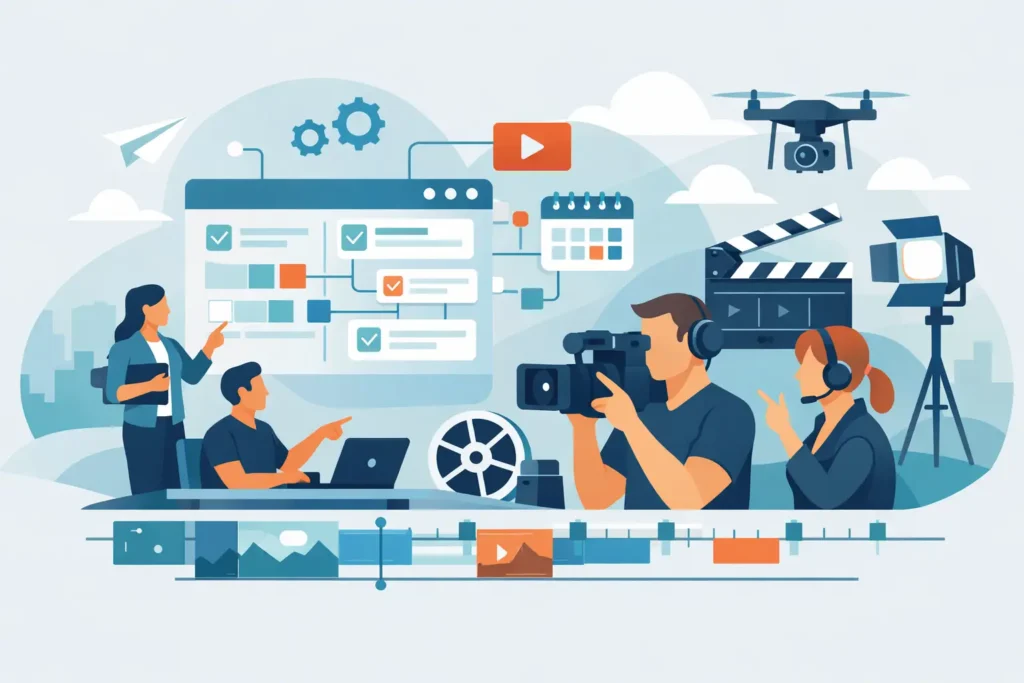
Video Production Project Management That Works
A video project can look simple from the outside: schedule a shoot, capture interviews, edit the footage, and publish. For the marketing director, nonprofit leader, or communications manager responsible for the result, the reality is more involved. Video production project management is what keeps the work moving when schedules change, stakeholders have opinions, and the final piece still needs to support a real organizational goal.
The best process does not create more meetings or paperwork. It removes uncertainty. It gives your team one clear path from the first conversation to final delivery, with the right decisions made at the right time.
Why video projects need active management
A polished video is the visible outcome of dozens of smaller decisions. Who needs to approve the message? Which location supports the story and works for the crew? What happens if the executive interview is delayed? Which version is intended for a fundraising event, social media campaign, or internal staff meeting?
Without ownership of those details, production can become a burden placed back on the client. A team may have strong footage and talented editors, yet still miss a campaign date because feedback was scattered, participants were not prepared, or the scope changed halfway through editing.
Good project management gives creative work a practical structure. It protects the message, the schedule, and the budget at the same time. It also helps clients avoid a common problem: managing several freelancers, specialists, and vendors simply to get one video completed.
For organizations that run hard, that operational simplicity matters. A recruiting campaign cannot wait for endless review cycles. A nonprofit impact story must be ready before a donor event. A public-information video has to be accurate, approved, and released on schedule.
Start with the decision the video needs to support
Before discussing cameras, music, or filming locations, define what the audience should understand, feel, or do after watching. That decision shapes every part of the project.
A hiring video may need to show candidates what it feels like to work on a team. A training video must make a process clear enough for staff to repeat it correctly. A brand film may need to build confidence with prospective customers or community partners. These goals can overlap, but trying to make one short video serve every audience usually weakens the message.
A capable production partner will ask focused questions early: Who is the audience? Where will this video appear? What action should follow? What proof, people, or moments make the message believable? Answers do not need to be perfect on day one. They do need to be clear enough to guide planning.
This is also the point to name the people who can make final decisions. A project can include input from leadership, marketing, HR, development, and program teams. It still needs one designated client lead who gathers feedback and resolves conflicting opinions. One point of contact prevents the edit from becoming a collection of unrelated preferences.
Build a production plan people can follow
The planning stage turns a good idea into a workable production. It covers the creative approach, but it also accounts for availability, approvals, access, logistics, and contingencies.
A clear plan typically establishes four milestones:
- Concept approval, including the audience, message, format, and scope
- Pre-production approval, including interview subjects, locations, schedule, and key talking points
- Production completion, when filming, photography, drone work, or livestream coverage occurs
- Post-production approval, when review rounds, final exports, and delivery dates are confirmed
These milestones give everyone a shared view of progress. They also make trade-offs visible before they become expensive. Adding a second filming day, scheduling an additional location, or creating multiple versions for different platforms may be the right choice. It simply needs to be discussed while there is still time to adjust the schedule and budget.
Not every project needs a detailed script. A tightly controlled training piece often benefits from one. A documentary-style nonprofit story may work better with an interview framework and planned B-roll. The right level of planning depends on the purpose of the video, the availability of participants, and how much flexibility the story requires.
Video production project management on shoot day
Shoot days are where careful planning earns its value. A production schedule should allow enough time for setup, lighting, sound checks, interviews, B-roll, and normal disruptions. People get pulled into meetings. Weather changes. A room that looked quiet during a location scout becomes busy at 10 a.m.
The client should not have to solve every issue in the moment. The production team manages the crew, equipment, shot priorities, and schedule adjustments. The client lead is most helpful when they can welcome participants, confirm access, and help the team protect the time of key leaders or subjects.
Preparation also improves how people appear on camera. Interviewees do not need to memorize a script unless the format requires it. They do need context. Let them know why they were selected, what topics they may be asked about, where to arrive, and how much time to reserve. A relaxed, informed participant gives a better interview than someone surprised by a camera crew.
For event coverage and livestreams, the plan needs an extra layer of discipline. There is no opportunity to recreate a keynote, donor moment, or live announcement. Roles, audio sources, graphics, internet requirements, backup plans, and delivery expectations should be settled well before guests arrive.
Keep feedback focused during editing
Editing is where the story takes shape, and it is also where poorly managed feedback can slow a project down. The goal is not to eliminate client review. The goal is to make review useful.
Set expectations before the first cut arrives. Confirm who will review it, how many review rounds are included, and what kind of feedback is most helpful. Time-stamped comments tied to the project goal are far more actionable than broad notes such as “make it stronger” or “try something different.”
Feedback should answer practical questions. Is the central message clear? Does the video sound like the organization? Are names, titles, data points, and claims accurate? Is there a missing moment that the audience needs to see? These notes help the editor improve the piece without losing direction.
There is a difference between a revision and a new concept. Replacing a line of narration, adjusting pacing, or selecting a different B-roll shot is part of refinement. Changing the audience, adding a new service line, or deciding halfway through that the video now needs a second language version may require additional work. Clear project management handles that conversation directly, without surprises.
Plan delivery for how the video will actually be used
Final delivery is more than receiving one video file. The intended use determines the versions, dimensions, captions, graphics, and runtime that make the content useful.
A video shown at an event may need a high-resolution master and a version with a clear opening. A social campaign may need shorter vertical cuts designed to earn attention quickly. An internal communications video may need captions for accessibility and viewing without sound. A recruiting initiative may benefit from one main story plus smaller clips that feature employees, workplace culture, or specific roles.
This is why distribution should be discussed near the beginning, not after the edit is locked. Planning for multiple deliverables early is usually more efficient than returning later to rebuild the project from scratch.
Organizations with recurring needs also benefit from continuity. When the same production team understands your brand, stakeholders, locations, and approval process, there is less onboarding each time. You can move faster while maintaining a consistent visual standard. That is especially valuable for teams balancing campaigns, events, hiring, donor communication, and day-to-day responsibilities.
What to expect from a dependable production partner
The right partner brings creative judgment, but they also bring accountability. They should be able to explain the next step, identify what they need from your team, and flag risks early. You should know who owns the schedule, how approvals will work, and what happens if a key detail changes.
At Intent Productions, that means managing the work through one integrated team, from concept and planning through filming, editing, and delivery. Clients stay involved in the decisions that require their expertise. The production team handles the production work.
Your organization has a message to move forward. A well-managed video project gives that message the attention it deserves without turning your staff into a production department.