
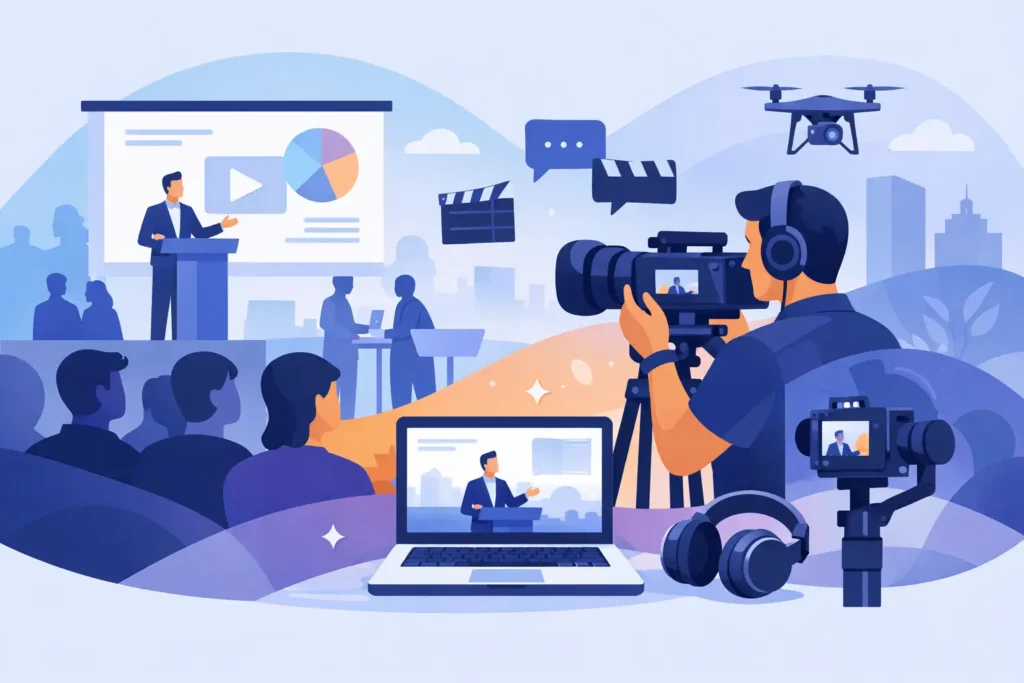
Conference Event Videography Services That Work
A conference takes months to plan and moves fast once the doors open. The keynote happens once. The strongest customer quote may come between sessions. The energy in the room is hard to recreate later. Conference event videography services help organizations hold onto those moments and turn a single event into useful communication long after teardown.
For marketing teams, nonprofit leaders, event planners, and public-sector communications staff, the goal is not simply to record what happened. It is to capture the material that advances the work: a keynote for people who could not attend, speaker clips for social channels, attendee reactions for next year’s promotion, and a clear visual record of the organization’s leadership.
What conference event videography should deliver
A well-covered conference produces more than a recap video. It creates a set of assets with different jobs. A two-minute highlight film can build excitement for next year. A full keynote recording can support training or continuing education. Short vertical clips can keep the conversation moving after the event. Interview footage can give the marketing team credible, human material for future campaigns.
The right mix depends on the event. An annual industry conference may need a polished promotional piece and a library of speaker sessions. An internal leadership summit may place more value on recorded presentations, employee interviews, and clips that reinforce a new initiative. A fundraising gathering may need donor stories, room energy, and a same-day video that supports the ask.
That distinction matters before cameras arrive. If the plan is only “get footage,” the final product often becomes a long collection of clips with no clear use. When the team starts with communication goals, the coverage is built around the moments that matter.
Start with the audience, not the camera plan
Before discussing camera positions or microphones, decide who needs to see the finished video and what they should do with it. That answer shapes every production decision.
If your main audience is attendees, session recordings and clear audio are the priority. If you want to attract future registrants, the focus shifts toward strong visuals, speaker sound bites, networking moments, signage, and crowd reactions. If leadership needs proof of impact, interviews with partners, sponsors, or participants may carry more weight than wide shots of the ballroom.
A good production partner will ask direct questions early: Which sessions are essential? Who needs to be interviewed? Are there sponsors or executives who must appear? Is any content embargoed? What must be delivered quickly? Those details prevent last-minute decisions when the agenda is already underway.
Plan for the realities of the venue
Conference video succeeds or fails on details that are easy to miss during event planning. A beautiful stage can still be difficult to film if the presenter is backlit. A large ballroom can sound poor if the video team does not receive a clean feed from the audio board. A fast-moving breakout schedule can leave no time to reset equipment between rooms.
Planning should account for room layouts, lighting, presentation screens, speaker movement, walk-on music, and access to the venue’s audio and internet systems. Livestreaming adds another layer. A venue may advertise Wi-Fi, but public Wi-Fi is not always reliable enough for a live program. A dedicated hardline or bonded cellular backup may be the better choice.
There are trade-offs. Full multi-camera coverage of every breakout session creates a valuable library, but it requires more crew, equipment, coordination, and budget. For some organizations, it makes more sense to record only the main stage and use a second team to capture interviews and event atmosphere. The right plan protects the highest-value content first.
Audio is the part attendees notice most
Viewers will tolerate a less-than-perfect camera angle longer than they will tolerate muddy, echoing, or missing audio. Speaker microphones should be recorded directly whenever possible, while room microphones capture applause, questions, and the feel of the crowd.
This requires coordination with the venue AV team and the conference audio provider. It should not be assumed that an audio feed will be available, clean, or correctly configured at showtime. Confirming the plan during pre-production reduces the risk of discovering a problem after the keynote is over.
Build a realistic shot list
A shot list does not need to be restrictive. It gives the crew a shared definition of success. It might include exterior venue footage, registration, sponsor activation, keynote speakers, breakout sessions, audience reactions, networking, award moments, and brief interviews with selected leaders or attendees.
It should also account for branding. Event signage, presentation slides, name badges, and sponsor displays help establish context. But filming logos alone does not tell the story. The strongest conference videos connect the organization’s message to people responding to it in real time.
Capture interviews while the event energy is real
Short interviews can give a conference video its strongest narrative. A speaker can explain why the topic matters. An attendee can describe what they are taking back to their organization. A sponsor can speak to the value of supporting the event. Those moments add meaning that room footage cannot provide on its own.
The process works best when interviews are scheduled, even if the schedule is flexible. Identify the people you want to feature, let them know in advance, and reserve a quiet location nearby. A hallway beside a loud exhibit floor is rarely the right setting for a clear interview.
Keep prompts simple and specific. Ask what problem brought someone to the event, what stood out, or what they will do differently next. The answer is usually more useful than asking for a general review of the conference.
Think beyond the event recap
The event may last one or two days, but the content can support communications for months. That is why delivery planning belongs in the initial conversation, not at the end of the project.
A practical package may include a short recap film, selected full-session edits, social clips, interview excerpts, and organized B-roll for future use. Some organizations also need speaker-ready files, captioned versions for accessibility, or a fast-turn clip to share before attendees leave.
Not every event needs every format. If your team does not have the capacity to publish ten social clips, a smaller group of high-quality assets may be more valuable. The goal is usable content, not a crowded folder of files no one has time to review.
At Intent Productions, the work is managed as one production process: planning, filming, editing, and delivery through one team and one point of contact. That structure matters most during conferences, where schedules change quickly and the client team already has enough to manage.
Choose a partner who can work inside the event plan
Conference coverage is a live production environment. Speakers run early or late. Rooms change. A sponsor wants a quick interview. A client needs a clip for tomorrow morning. The video team should be prepared, calm, and clear about what is possible without making the event staff manage production details.
Experience also matters because event footage cannot be recreated. A dependable crew knows how to protect a camera view of the stage, monitor audio, stay aware of the agenda, work respectfully around attendees, and capture unscripted moments without disrupting the program.
Ask prospective partners how they handle pre-event planning, audio coordination, multi-room coverage, livestream contingencies, interview scheduling, review rounds, and delivery timelines. The answers should be straightforward. Clear timelines and defined responsibilities make the work easier for everyone.
A conference is one of the few moments when your organization’s people, ideas, partners, and audience are in the same place. Treat the video plan as part of the event strategy, not an item added after the agenda is final. With the right preparation, the cameras do more than document the day. They give your team a clear way to keep the message working after the room is empty.